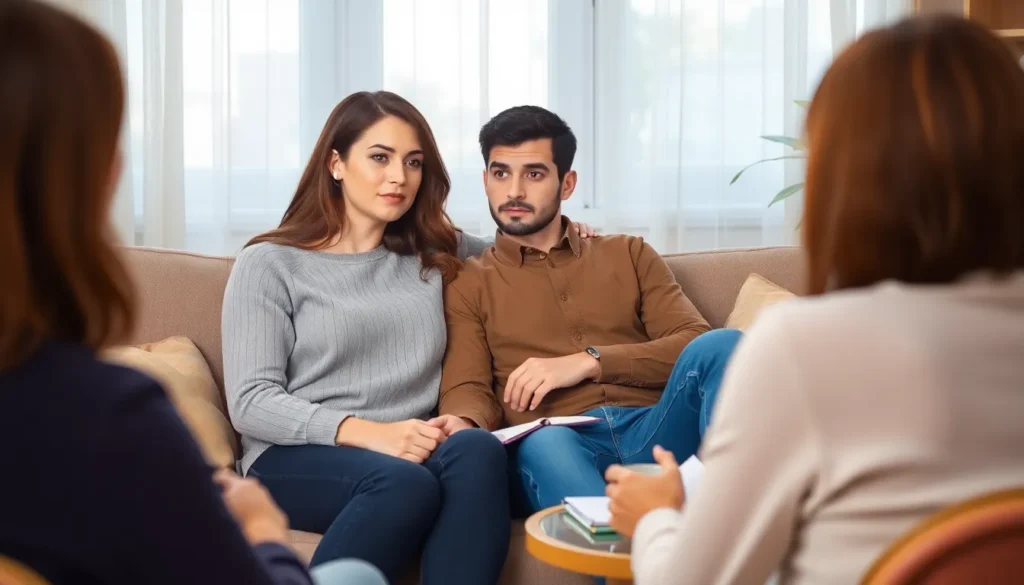
Relationships can be as tricky as trying to assemble IKEA furniture without the instructions. When couples hit a rough patch, it’s easy to feel like they’re navigating a maze with no exit. That’s where couples counseling swoops in like a superhero, ready to save the day. It’s not just about airing grievances; it’s about rediscovering the love that brought them together in the first place.
Understanding Couples Counseling
Couples counseling serves as a resource to navigate relationship challenges. This process involves professional guidance to resolve conflicts and enhance connection.
Definition and Purpose
Couples counseling refers to structured therapy for partners in romantic relationships. It aims to improve communication and foster understanding. Trained therapists assist in identifying and addressing underlying issues. The primary goal involves helping couples achieve emotional intimacy and resolving conflicts. Effective counseling leads to healthier interactions and stronger bonds, making it invaluable for relationship growth.
Common Issues Addressed
Common issues couples face include communication breakdown, trust issues, and differing priorities. Couples often struggle with conflict resolution techniques. Emotional disconnect frequently emerges when partners feel unheard or unvalued. Additionally, financial stress and parenting disagreements can drive wedges between couples. Therapists focus on these areas to facilitate constructive discussions and promote solutions. Addressing these problems through counseling helps couples regain intimacy and understanding.
The Counseling Process
The counseling process involves several structured steps designed to help couples navigate their challenges effectively. Engaging with a trained therapist sets the foundation for meaningful change.
Initial Assessment
A therapist begins with an initial assessment to understand the dynamics of the relationship. This step focuses on gathering information about each partner’s experiences and perspectives. Couples often express their individual concerns, highlighting issues like communication breakdown and trust problems. With this knowledge, therapists can identify patterns and underlying conflicts. This comprehensive evaluation typically includes discussing the couple’s history and current challenges. The therapist’s goal is to foster an open environment that encourages honesty and vulnerability.
Setting Goals
After the assessment, the therapist facilitates goal-setting for the counseling journey. Every couple agrees on specific objectives they want to achieve during therapy. Common goals include improving communication skills, rebuilding trust, and enhancing emotional intimacy. Couples often prioritize these goals based on their unique needs and circumstances. Regularly reviewing these objectives allows the therapist to track progress and make necessary adjustments along the way. Focusing on clear, actionable targets empowers couples to work collaboratively towards resolution and understanding.
Types of Couples Counseling
Couples counseling comes in various forms, each offering unique benefits tailored to different needs. Understanding these types helps couples choose the best option for their circumstances.
Traditional In-Person Counseling
Traditional in-person counseling involves face-to-face sessions with a trained therapist. Couples attend weekly or biweekly meetings in a private setting, allowing for open and honest discussions. This mode of therapy fosters a personal connection, enhancing the emotional depth of the sessions. A therapist guides the couple through communication exercises, conflict resolution strategies, and relationship-building activities. The structured environment encourages accountability and commitment to the counseling process. Many couples find that in-person interactions offer a safe space for addressing sensitive issues, which often leads to profound insights and breakthroughs.
Online Couples Counseling
Online couples counseling provides flexibility and accessibility for couples seeking support. Virtual platforms enable partners to attend sessions from the comfort of their homes, eliminating travel barriers. Therapists utilize video conferencing tools to facilitate conversations, ensuring that couples maintain a personal connection despite physical distance. This form of counseling often attracts younger couples who embrace technology for convenience. Online sessions yield the same benefits as traditional counseling, including real-time feedback and guidance. The adaptability of scheduling allows couples to fit therapy into busy lives while encouraging consistent progress in addressing relationship challenges.
Benefits of Couples Counseling
Couples counseling provides tangible benefits that significantly impact relationships. Couples often experience enhanced communication and emotional connection through structured therapy.
Improved Communication
Communication serves as the foundation of any healthy relationship. Couples counseling helps partners express their thoughts and feelings more openly. Trained therapists guide sessions to focus on active listening and constructive feedback. Couples learn to articulate their needs without placing blame. Emotional check-ins become routine, fostering a safe space for discussions. Using specific strategies, partners improve understanding of each other’s perspectives. Regular practice leads to more effective conflict resolution and prevents misunderstandings. With enhanced communication, couples build stronger connections and create a positive dialogue pattern.
Enhanced Emotional Connection
Emotional connection plays a crucial role in relationship satisfaction. Couples counseling offers tools to deepen this connection. Many partners uncover emotional blocks and learn to express vulnerability. Therapists encourage emotional sharing and physical affection. As couples explore their feelings, they develop greater empathy towards each other. Exercises may include identifying shared goals and values. Those activities align partners on a more profound emotional level. Strengthening emotional intimacy leads to a more fulfilling partnership. Ultimately, couples leave counseling with increased support and a renewed sense of togetherness.
Couples counseling offers a pathway to healing and understanding in relationships. By addressing communication issues and emotional disconnects couples can rediscover the love that brought them together. Engaging with a trained therapist provides the tools necessary to navigate challenges effectively and fosters a deeper emotional connection.
Whether opting for traditional in-person sessions or the convenience of online counseling, couples can benefit from structured support tailored to their unique needs. The journey through counseling not only resolves conflicts but also strengthens the bond between partners, paving the way for a healthier and more fulfilling relationship. Embracing this process can lead to lasting change and renewed intimacy.